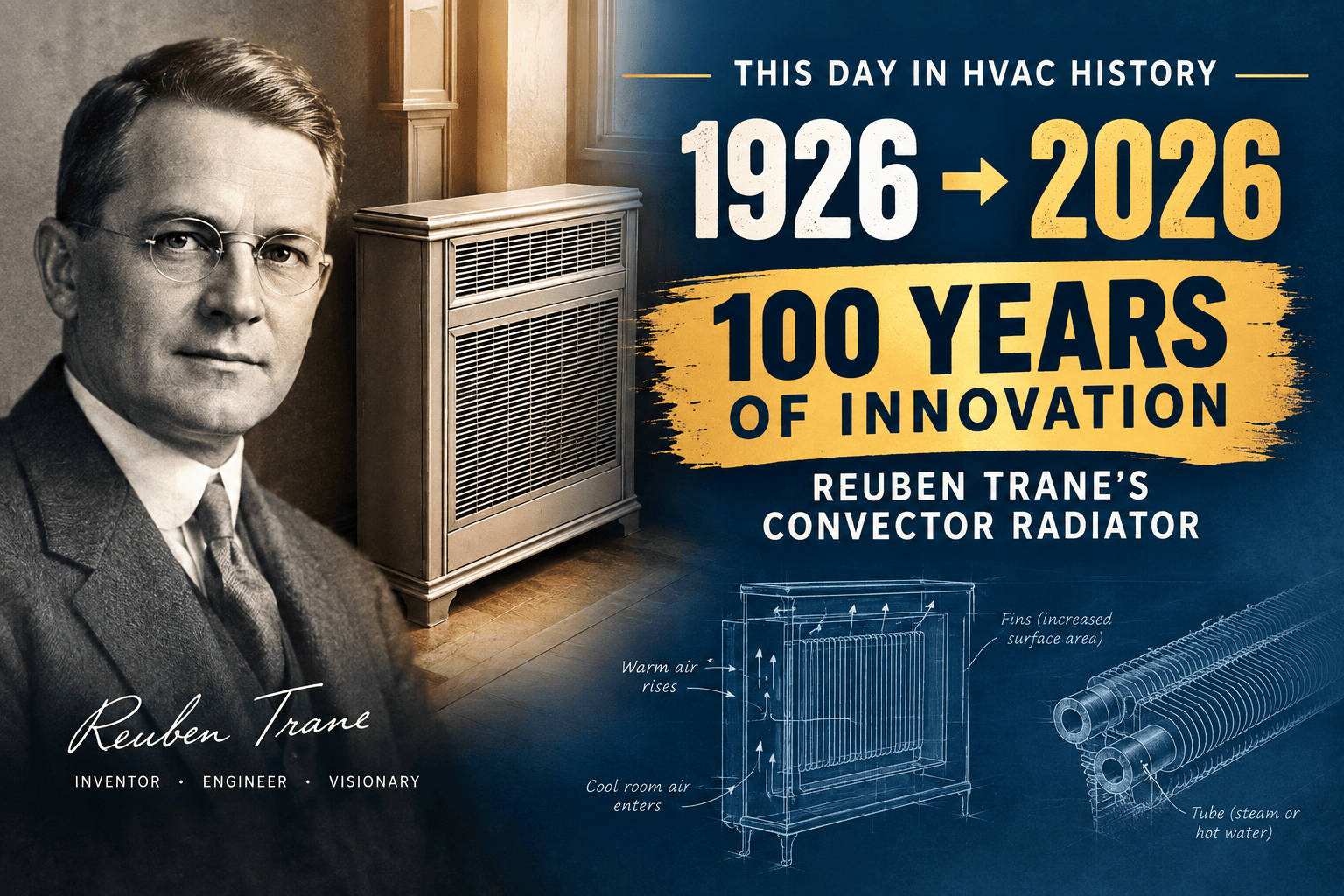
2026 marks 100 years since Reuben Trane introduced the Heat Cabinet and lightweight convector radiator. That 1926 innovation helped advance the finned-tube heat exchanger, a technology still found throughout modern HVAC systems today.
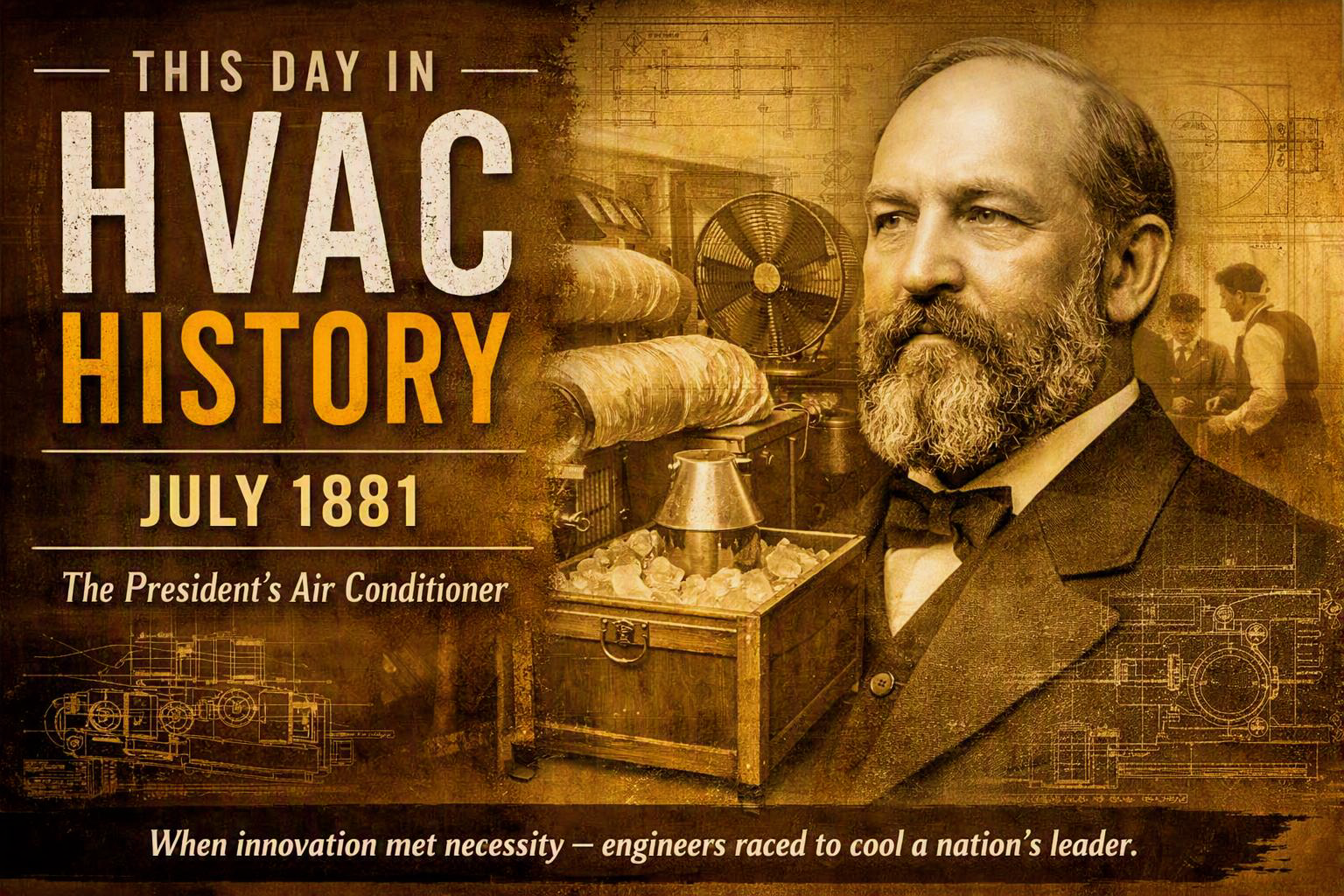
In 1881, U.S. Navy engineers built an ingenious cooling system inside President James Garfield's White House sickroom using ice, water, wet screens and an electric blower. It reportedly lowered the room temperature by about 20°F—and became a fascinating early chapter in HVAC history.
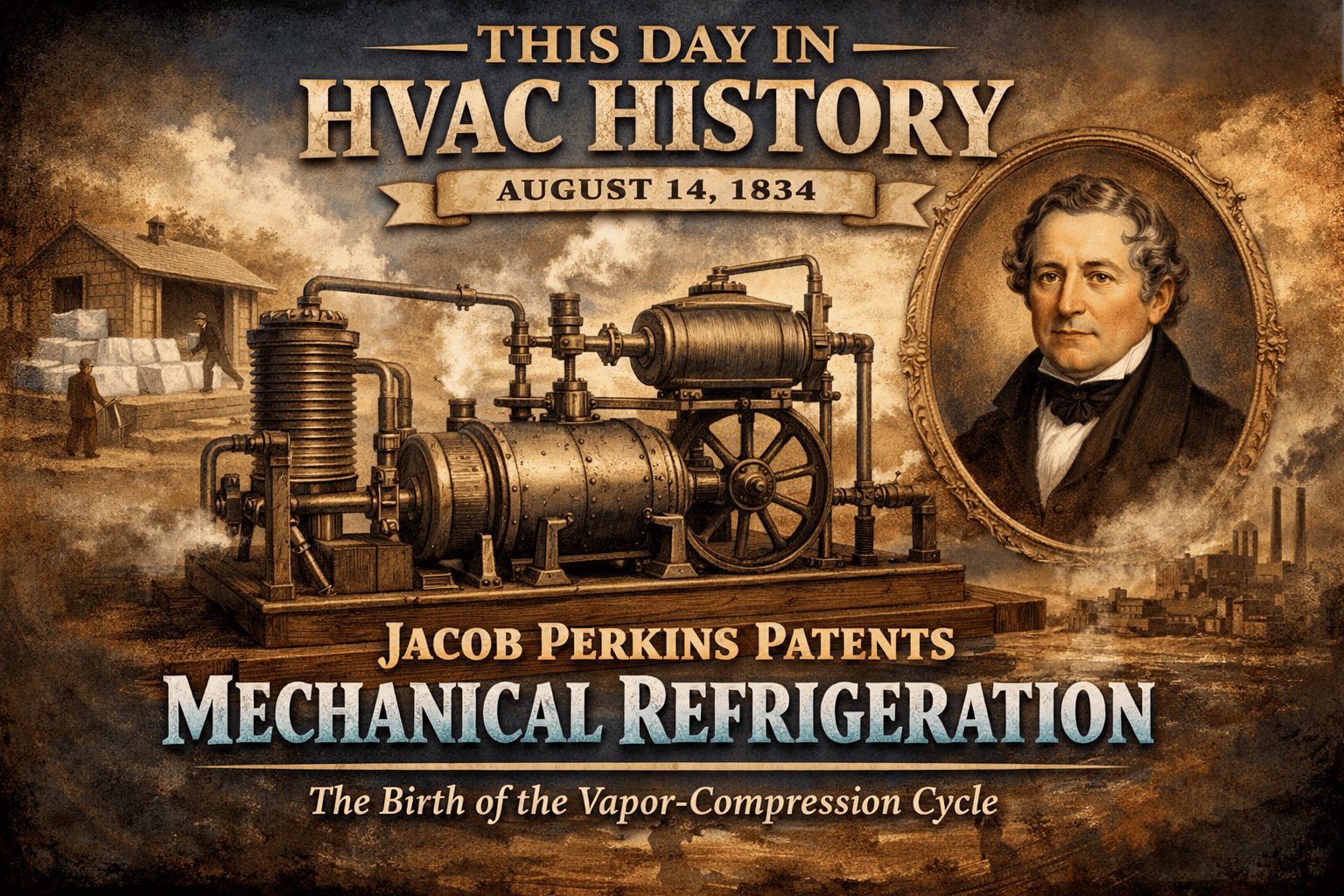
In 1834, inventor Jacob Perkins developed and patented a working mechanical refrigeration system based on the vapor-compression cycle. Nearly 200 years later, that same fundamental refrigeration cycle remains at the heart of modern refrigerators, air conditioners and heat pumps.
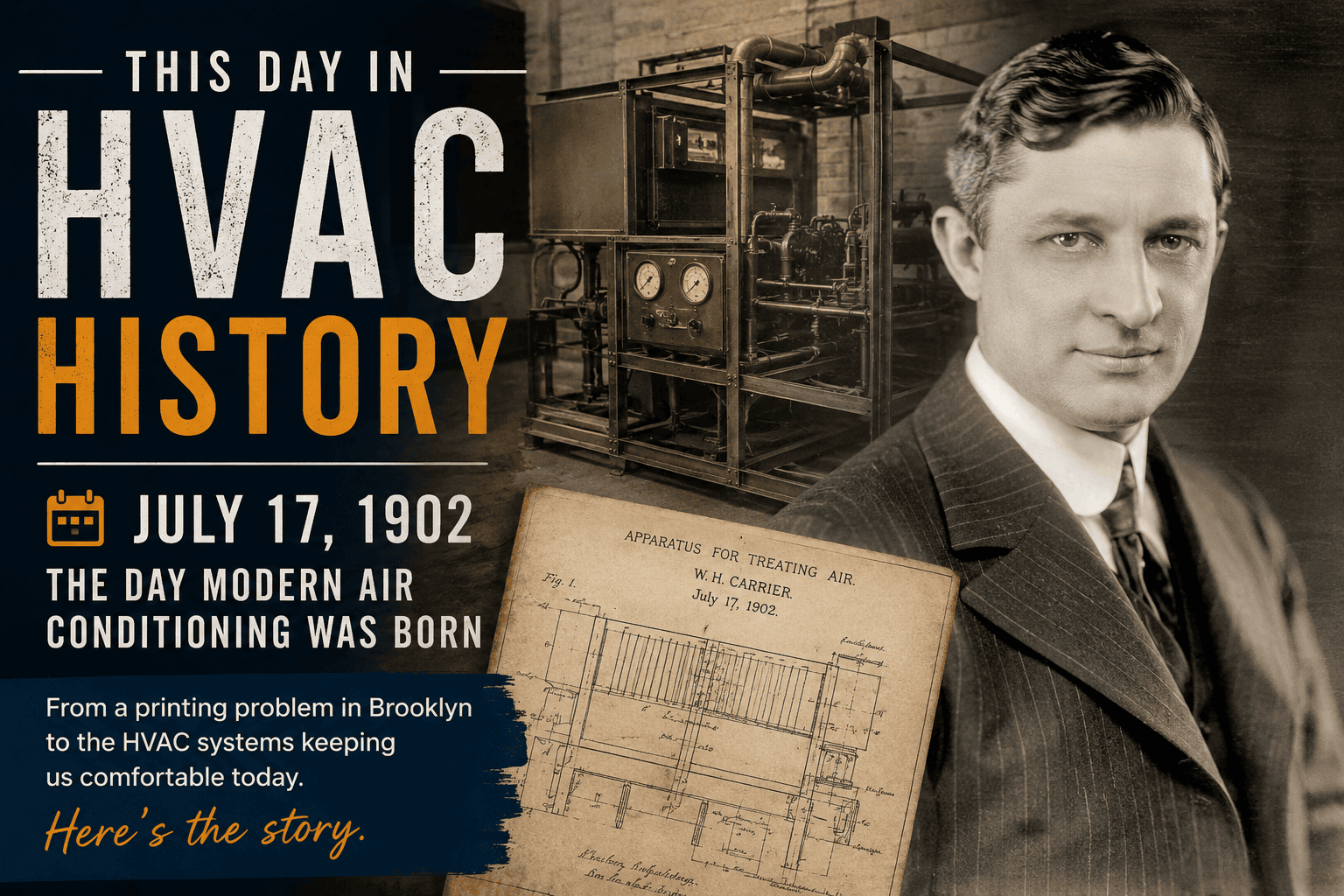
In 1902, engineer Willis Carrier developed the first modern air-conditioning system—not to keep people cool, but to solve a humidity problem at a Brooklyn printing plant. Discover how a printing problem helped launch the modern HVAC industry—and the surprising New York connection behind it.