
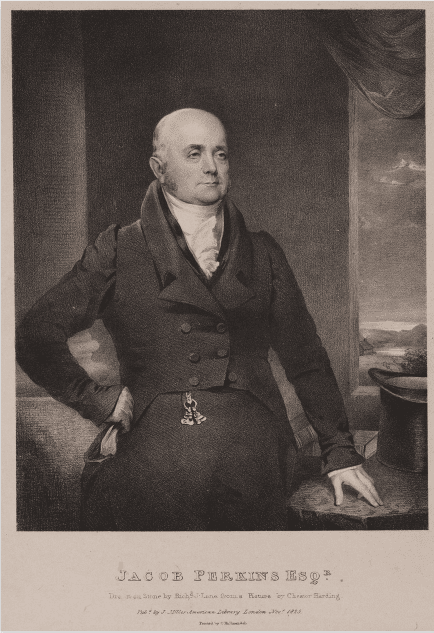
Jacob Perkins Patents Mechanical Refrigeration — The Birth of the Vapor‑Compression Cycle
Before refrigerators cooled kitchens and air conditioners made summers bearable, “cold” was something people had to find — not make. Ice was harvested in winter, stored in cellars, and rationed through the year. Then an American inventor changed everything.
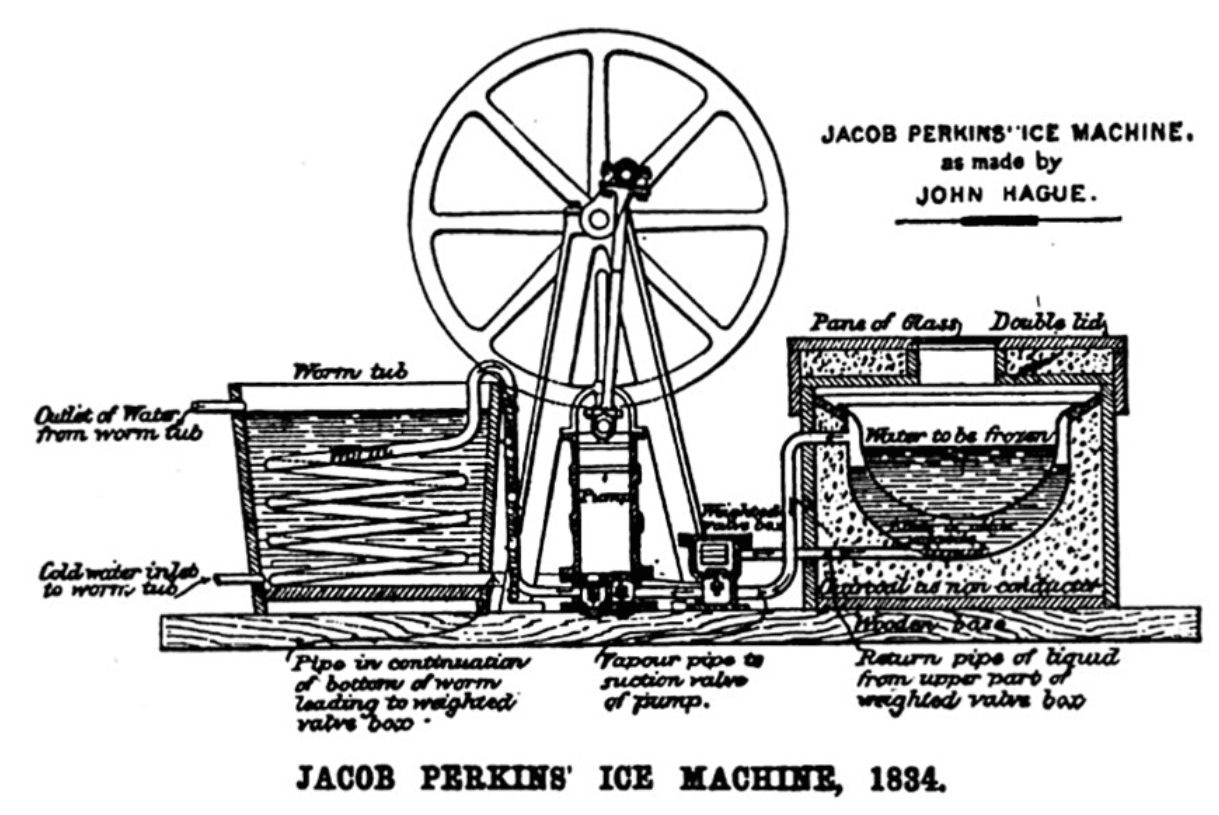
On August 14, 1834, Jacob Perkins received a British patent for an apparatus that could produce ice and cool fluids continuously. It was the first practical machine built on the vapor‑compression refrigeration cycle — the same principle that drives modern HVAC systems.
Before Mechanical Refrigeration
For most of human history, cold wasn’t something you could create — it was something you had to find. People harvested natural ice from lakes and rivers during winter, packed it in sawdust or straw, and stored it in icehouses to last through the warmer months. Wealthy households and businesses paid for ice deliveries, while everyone else relied on cellars, caves, and underground storage to keep food from spoiling.
Preservation methods were creative but limited: salting, smoking, drying, pickling, and fermenting were the best ways to fight heat and time. Even breweries and meatpackers depended on seasonal ice shipments, which meant production slowed or stopped when the ice ran out.
By the early 1800s, inventors began asking a revolutionary question — could cold be manufactured instead of harvested? In 1805, American inventor Oliver Evans described a vapor‑compression refrigeration concept that used mechanical power to move heat. But Evans never built his machine.
The Machine That Started It All
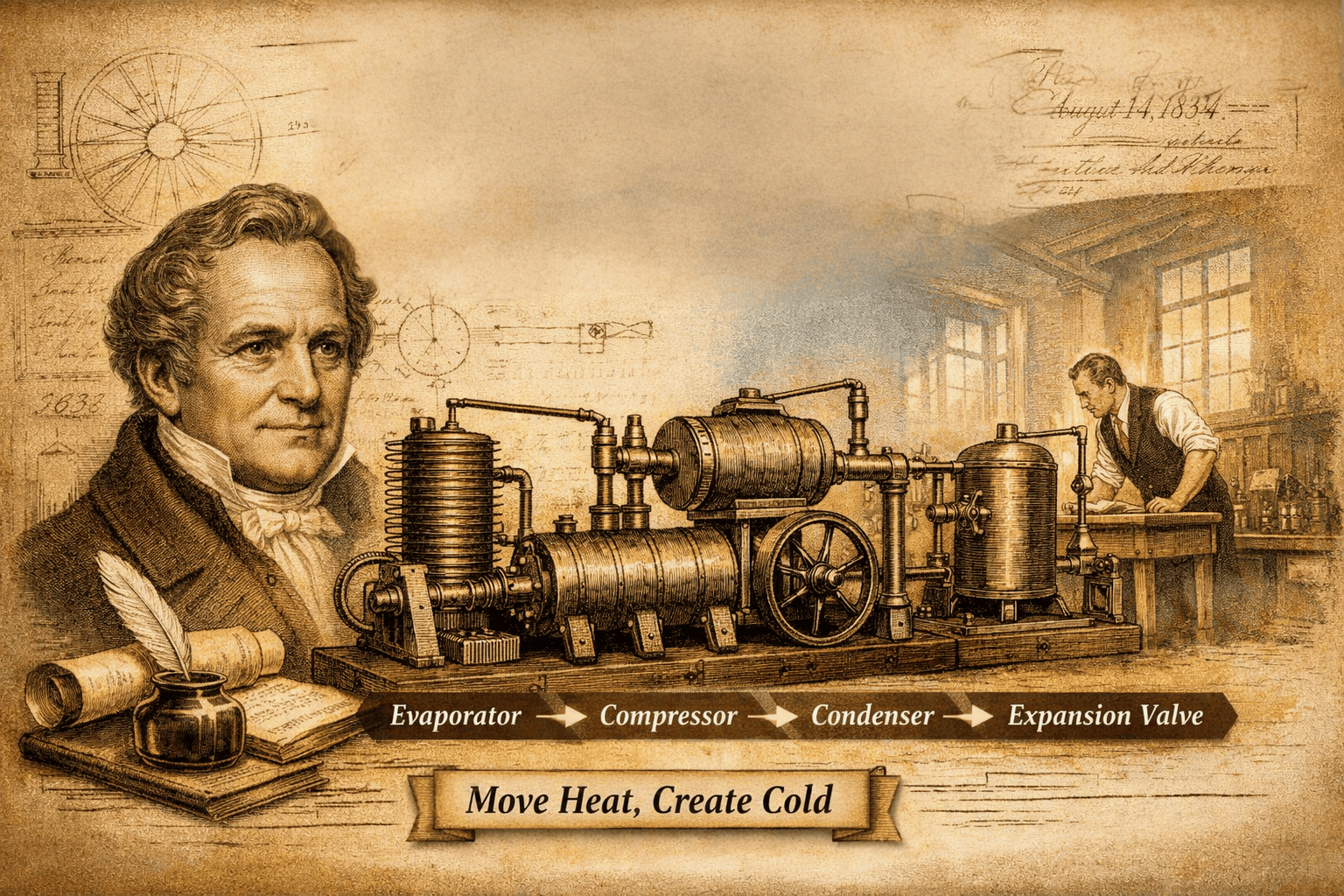
Jacob Perkins’ breakthrough wasn’t just a clever design — it was the moment refrigeration became a mechanical reality. Born in Newburyport, Massachusetts, in 1766, Perkins built his career as a prolific engineer, working on steam engines, printing technology, and precision mechanical systems. Later, he moved to London, where he continued experimenting and refining his ideas. It was there that he created the machine that changed the future of cooling. Perkins’ 1834 design used ether as the working fluid in a closed cycle: the fluid evaporated under low pressure to absorb heat, then was compressed and condensed so the process could repeat. That cycle should look familiar — it’s the same fundamental sequence used in modern HVAC systems: Evaporator → Compressor → Condenser → Expansion Device → Evaporator. Nearly two centuries later, the equipment and refrigerants have evolved, but the thermodynamic principle remains the same. Perkins’ refrigeration patent became one of his most influential contributions to engineering history. Although his machine wasn’t commercially successful, it proved that mechanical work could move heat, laying the foundation for every refrigerator, air conditioner, and heat pump built since.Perkins died in 1849, but his ideas lived on — and the cycle he demonstrated still powers the systems we rely on today.If you want, I can now drop this directly into your full blog draft so everything flows perfectly.
From Making Ice to Cooling Buildings
Perkins’ machine wasn’t commercially successful, but it proved something revolutionary — that mechanical work could move heat. That single insight transformed refrigeration from a curiosity into a cornerstone of modern life.
After Perkins, inventors like James Harrison (1856) and Carl von Linde (1876) refined the concept with stronger compressors, improved condensers, and safer refrigerants. Harrison’s system was used to make ice for breweries and meatpacking plants, while Linde’s innovations helped cool industrial processes and store perishable goods on a large scale.
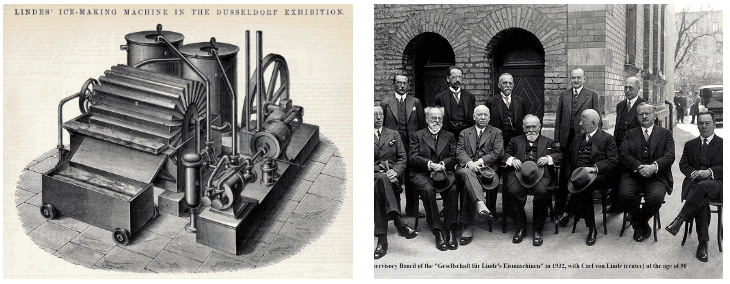
By the late 19th century, mechanical refrigeration was powering ice factories, breweries, and food transport, replacing natural ice entirely. As technology advanced, engineers realized the same principles could be applied not just to preserve food — but to cool air for comfort. That leap gave rise to the first air‑conditioning systems in theaters, factories, and eventually homes.
From Perkins’ ether‑based experiment to today’s high‑efficiency heat pumps, the journey from making ice to cooling buildings shows how one idea — moving heat instead of creating cold — reshaped industries, cities, and daily life.
Perkins’ machine wasn’t commercially successful, but it proved something revolutionary — that mechanical work could move heat. That single insight transformed refrigeration from a curiosity into a cornerstone of modern life.
After Perkins, inventors like James Harrison (1856) and Carl von Linde (1876) refined the concept with stronger compressors, improved condensers, and safer refrigerants. Harrison’s system was used to make ice for breweries and meatpacking plants, while Linde’s innovations helped cool industrial processes and store perishable goods on a large scale.
By the late 19th century, mechanical refrigeration was powering ice factories, breweries, and food transport, replacing natural ice entirely. As technology advanced, engineers realized the same principles could be applied not just to preserve food — but to cool air for comfort. That leap gave rise to the first air‑conditioning systems in theaters, factories, and eventually homes.
From Perkins’ ether‑based experiment to today’s high‑efficiency heat pumps, the journey from making ice to cooling buildings shows how one idea — moving heat instead of creating cold — reshaped industries, cities, and daily life.
The Big Idea
Think about what Perkins achieved in 1834: no refrigerators, no supermarkets, no air conditioning — yet he built a machine that could create artificial cold. That single concept launched nearly 200 years of innovation.
Think about what Perkins achieved in 1834: no refrigerators, no supermarkets, no air conditioning — yet he built a machine that could create artificial cold. That single concept launched nearly 200 years of innovation.
Look at Your HVAC System
Inside every modern refrigeration or air‑conditioning unit, refrigerant moves through a continuous cycle:
Evaporator absorbs heat
Compressor raises pressure
Condenser rejects heat
Expansion device lowers pressure
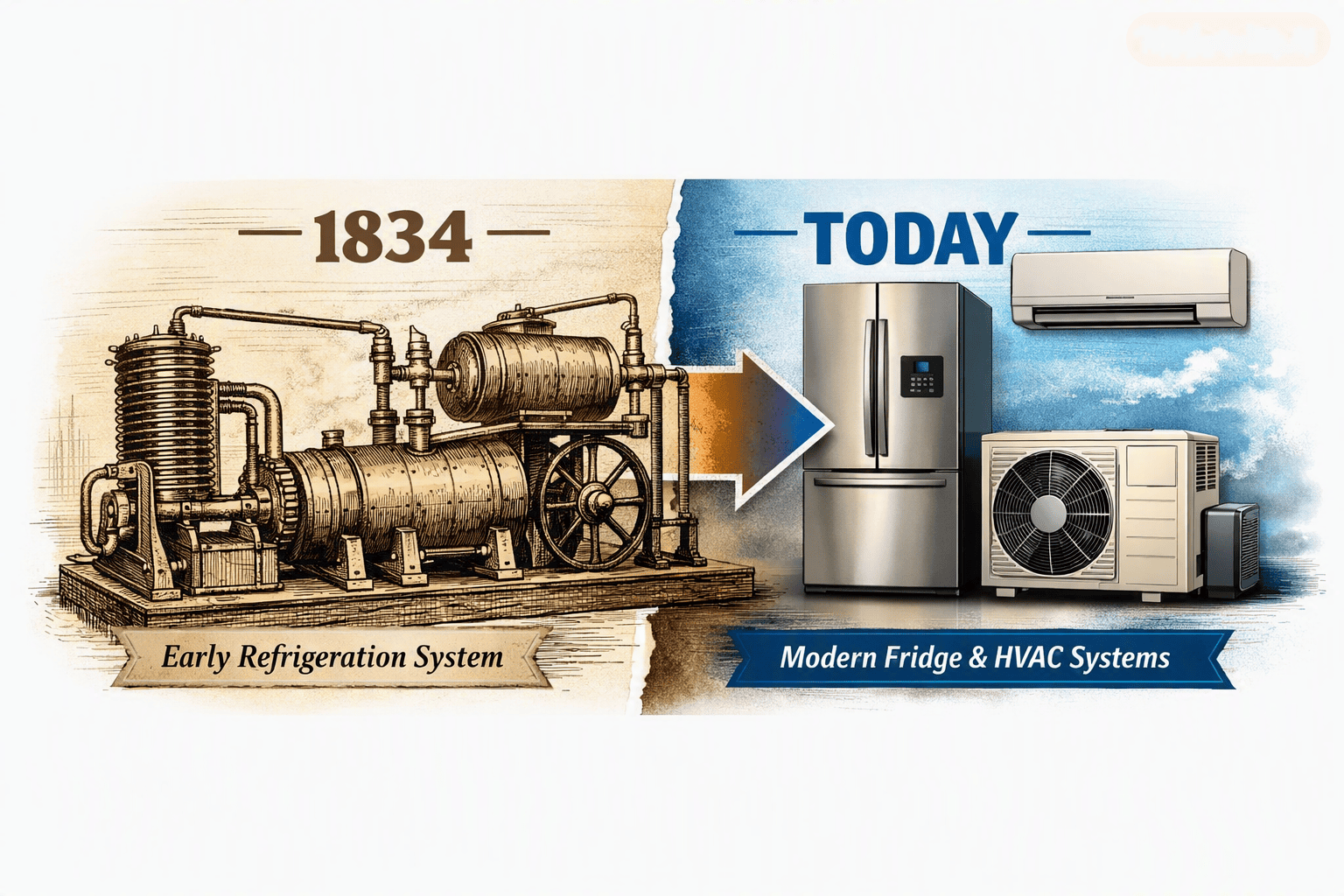
It’s the same cycle Perkins demonstrated — just refined, automated, and scaled for today’s world.
Inside every modern refrigeration or air‑conditioning unit, refrigerant moves through a continuous cycle:
Evaporator absorbs heat
Compressor raises pressure
Condenser rejects heat
Expansion device lowers pressure
It’s the same cycle Perkins demonstrated — just refined, automated, and scaled for today’s world.
The JMH Takeaway
Modern HVAC systems might look complex (compressors, sensors, valves, heat exchangers, electronics) but underneath all that technology lies one elegant idea:
Move heat from one place to another.
Jacob Perkins proved it could be done mechanically and continuously. Almost two centuries later, we’re still building on that foundation.
That’s the history behind the equipment we work with today. Welcome back to This Day in HVAC History!
Did You Know?
Perkins’ machine used a closed‑loop cycle, allowing the refrigerant to circulate continuously rather than relying on fresh ice. That innovation is why his 1834 patent is considered the first truly practical refrigeration system.
Perkins’ machine used a closed‑loop cycle, allowing the refrigerant to circulate continuously rather than relying on fresh ice. That innovation is why his 1834 patent is considered the first truly practical refrigeration system.
Sources & Further Reading
ASME — Perkins Vapor‑Compression Cycle for Refrigeration https://www.asme.org/about-asme/engineering-history/landmarks/274-perkins-vapor-compression-cycle-for-refrigeration
ASHRAE — Air Conditioning and Refrigeration Timeline https://www.ashrae.org/about/mission-and-vision/ashrae-industry-history/air-conditioning-and-refrigeration-timeline
Smithsonian National Museum of American History — Jacob Perkins Ice Machine, 1834 https://americanhistory.si.edu/collections/object/nmah_846195
Wikimedia Commons — Jacob Perkins’ 1834 Ice Machine https://commons.wikimedia.org/wiki/File:Jacob_Perkins%27_Ice_Machine_1834_from_Scientific_American_Article.jpg
ASME — Perkins Vapor‑Compression Cycle for Refrigeration https://www.asme.org/about-asme/engineering-history/landmarks/274-perkins-vapor-compression-cycle-for-refrigeration
ASHRAE — Air Conditioning and Refrigeration Timeline https://www.ashrae.org/about/mission-and-vision/ashrae-industry-history/air-conditioning-and-refrigeration-timeline
Smithsonian National Museum of American History — Jacob Perkins Ice Machine, 1834 https://americanhistory.si.edu/collections/object/nmah_846195
Wikimedia Commons — Jacob Perkins’ 1834 Ice Machine https://commons.wikimedia.org/wiki/File:Jacob_Perkins%27_Ice_Machine_1834_from_Scientific_American_Article.jpg