
100 Years of Innovation
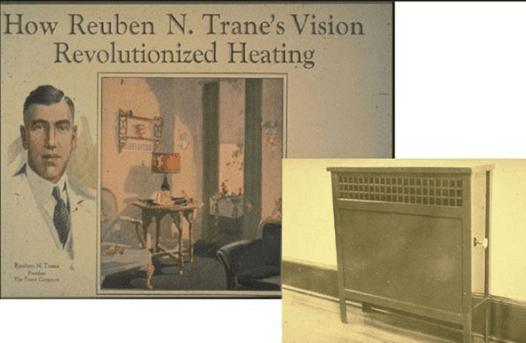
Reuben Trane's Convector Radiator
One century ago, an engineer set out to make heating equipment lighter, more efficient, and easier to work with. In 2026, we're celebrating a milestone that deserves some attention: 100 years since the introduction of the Trane Heat Cabinet featuring Reuben Trane's revolutionary convector radiator. What began as an attempt to improve the way buildings were heated became an important step in the development of the modern HVAC coil. And a century later, the basic idea is still everywhere.
The Radiator Problem
In the early 20th century, cast-iron radiators were a familiar sight in homes and commercial buildings. They worked. They produced heat. But they were also heavy, bulky, and difficult to handle and install.
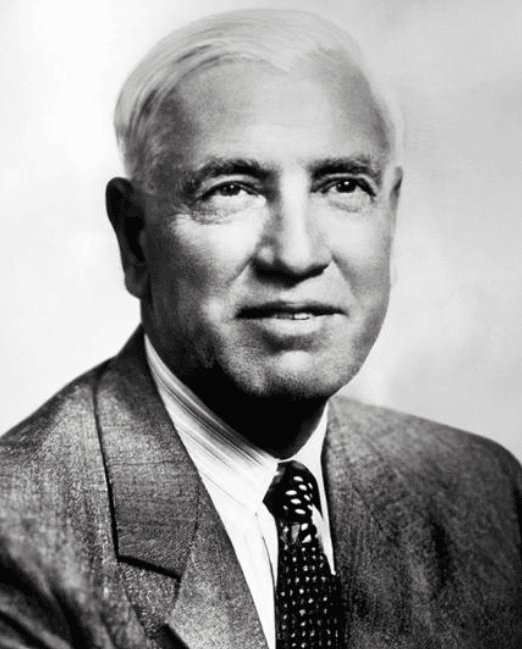
Reuben Trane, a mechanical engineer working in his family's plumbing and heating business in La Crosse, Wisconsin, knew the heating industry well. He saw an opportunity to rethink the traditional radiator. Instead of relying on massive sections of cast iron, why not create a heating device that could provide effective heat transfer while using a much lighter construction?
That question led to one of the most important innovations of his career.
A Radically Different Radiator
Trane's solution was a pretty big departure from the massive cast-iron radiators common at the time. Instead of building a heating surface out of heavy cast-iron sections, Reuben Trane developed a tube-and-fin design that used lighter materials while creating a large amount of surface area for heat transfer. The basic idea was clever:
A heating medium (such as steam or hot water) would travel through the tubing. Fins attached to the tubing increased the amount of metal exposed to the surrounding air, giving the heat more surface through which to transfer. That meant you could get a lot of heat-transfer area without needing a giant block of cast iron.
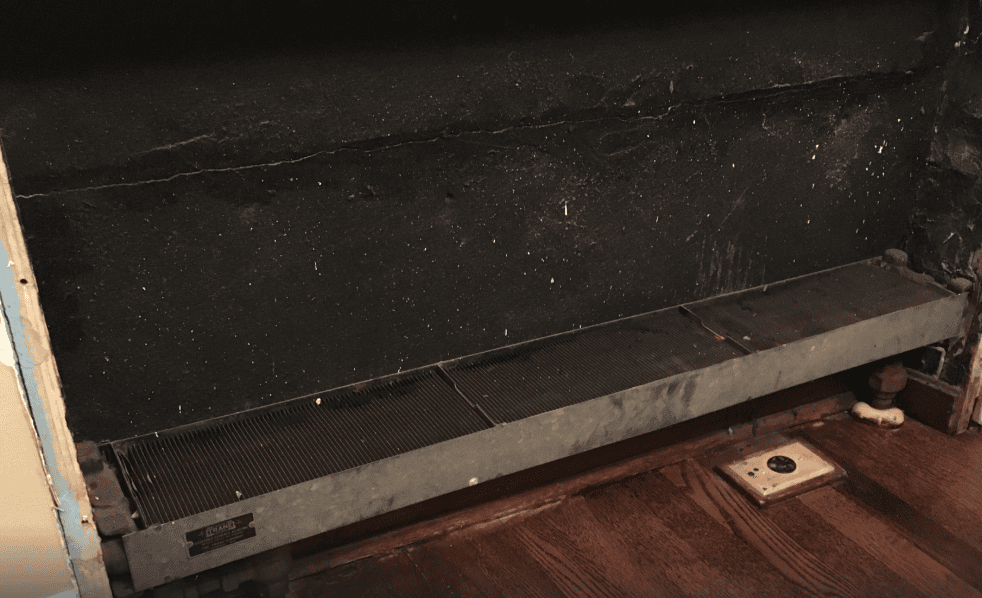
The result was the Trane Heat Cabinet, which enclosed the convector inside a finished cabinet rather than leaving a traditional radiator exposed in the room. And the cabinet wasn't just there for looks, it helped create a natural path for the air. Cooler room air entered through the lower portion of the cabinet. As that air passed over the heated coil, it warmed up. The warmer air became less dense and naturally rose, leaving through the top of the cabinet and drawing more cooler room air in behind it. There was no electric fan pushing the air through the unit. The movement of the air came from the heat itself.
Steam or hot water → heated tube → fins transfer heat → warm air rises → cooler air enters → repeat.
That natural circulation is called convection, and it is the reason the device was known as a convector radiator. The important part wasn't simply that Trane had made a smaller radiator. He had created a different way of thinking about the relationship between heat, surface area and airflow.
And that idea would prove to have a very long life.
WHY THE FINS MATTERED
The fins may look like a small detail, but they were one of the most important parts of the design. Imagine a single bare metal tube carrying hot water.
Heat can transfer from that tube into the surrounding air—but only across the relatively small surface of the tube itself. Now attach dozens of thin metal fins to that tube. Suddenly, the amount of surface area available to transfer heat becomes dramatically larger. That's the basic reason finned-tube heat exchangers became so useful.
More surface area = more opportunity to transfer heat.
It's a simple engineering principle, but it has enormous practical consequences. The same basic idea eventually found applications far beyond residential heating. Variations of finned-tube heat exchangers became useful in heating coils, cooling coils, air-handling equipment and other HVAC applications. So when we talk about Reuben Trane's 1926 invention, we're not just talking about an old-fashioned radiator. We're talking about an important step in the evolution of the HVAC coil.
A BETTER WAY TO HEAT A ROOM
Another advantage of the convector design was flexibility. A massive cast-iron radiator had a substantial physical presence in a room. The Heat Cabinet could be incorporated into the surrounding architecture in a much more compact and controlled way. That made the technology attractive for buildings where appearance, available space and practical installation all mattered. And because the convector could use steam or hot water, it fit naturally into the hydronic heating systems already being used in many buildings. It wasn't throwing away everything engineers already knew. It was improving the heat-delivery portion of the system.
That distinction matters. Some of the most important HVAC innovations haven't replaced the entire system. They've simply taken one part of it and made it lighter, more efficient, easier to install, or easier to control. That's exactly what Trane's convector did.
1926 → 2026: THE IDEA DIDN'T DISAPPEAR
A hundred years can make technology look completely different. Modern HVAC equipment has electronic controls, sensors, pumps, valves and sophisticated automation that Reuben Trane couldn't have imagined. But open up a modern heating or air-handling system and you'll still find heat-transfer surfaces designed to maximize the exchange of energy between a fluid and moving air. That's the remarkable part of this story. The equipment, materials and controls all evolved. But the fundamental engineering problem remained the same:
How do we transfer heat efficiently?
Reuben Trane's answer in 1926 helped establish a design approach that would remain useful for generations. And in 2026, that makes the Heat Cabinet's 100-year anniversary more than just a company milestone. It's a century-old example of an engineering idea that kept evolving rather than disappearing.

One More Reason to Recognize Trane
The centennial isn't the only reason 2026 is an important year for Reuben Trane.
He was also selected for induction into the National Inventors Hall of Fame's 2026 class, recognizing his work on the lightweight convector radiator.
So this year marks both:
100 years since his landmark heating invention and
a new national recognition of the engineer behind it. That's a pretty fitting anniversary for an invention whose descendants can still be found throughout modern HVAC.
THE JMH TAKEAWAY
A century of HVAC innovation can be summed up pretty simply:
Someone sees a problem.
Someone finds a better way.
Someone else improves it.
Reuben Trane saw the limitations of bulky cast-iron radiators and developed a lighter, more efficient approach to transferring heat.
Over the next 100 years, engineers would build on ideas like his to create the heating and HVAC equipment we know today.
The technology keeps changing. The engineering keeps getting smarter. But the goal remains remarkably familiar:
Keep people comfortable by moving heat where it needs to go.
1926 → 2026
100 YEARS OF INNOVATION
🔥 That's the history behind the equipment we work with today.
Welcome back to This Day in HVAC History.
There's a LOT more history behind your heating system.